Bruce Wylie became windsurfing Olympic Champion and World Champion during his active regatta years. Now the Australian is head of the windsurfing division of the biggest windsurfing board manufacturer Cobra International in Thailand.
How did you get into windsurfing?
I grew up close to a salt water lake connected to the ocean, Lake Macquarie in NSW, Australia. My father was into Yacht Racing, We used to spend the weekends camping on the yachts and my father also and put me and my older brothers into dinghy racing when we were very young. Then a family friend picked up a Windsurfer from Sydney and introduced me and my brothers to Windsurfing in 1978. From then on we were hooked.
What fascinates you about windsurfing?
In the early days it was a great challenge, especially since I was quite small at 12 years old and using a Windsurfer with a heavy teak boom. But the thrill of first getting the board moving was something I will never forget. And then the ongoing challenge of developing skills to improve my performance, and adventures coming from chasing the sport all over the world were, of course, life changing. My dream now is to share some of these feelings, adventures and opportunities with others so they might have the some of the same experiences I enjoyed in the past.
You have participated very successfully in competitions. One of your successes is the win at the 1984 Olympic Games. In which other classes were you active and until when?
In late 84, I also won the Windsurfer Class World Championships in Course Racing, Slalom and Pentathalon, 2nd in Freestyle and 3rd in Slalom. (Pentathlon comprised five disciplines, including slalom, Olympic course race, freestyle, marathon / ed.)
From there I did some Div II racing, (these were pure displacement hulls, which had advantages in low winds / ed.) and then straight into the WSMA Pro Circuit where I joined the Mistral Gaastra Team back in 1986. I raced on the Pro Circuit for 12 Years with my last year in 1997. During my prime, I was routinely top 10 with a few top 5 placing’s, My World Ranking at that time was abt 6th place Overall for a few years during this time as a Professional Windsurfer.
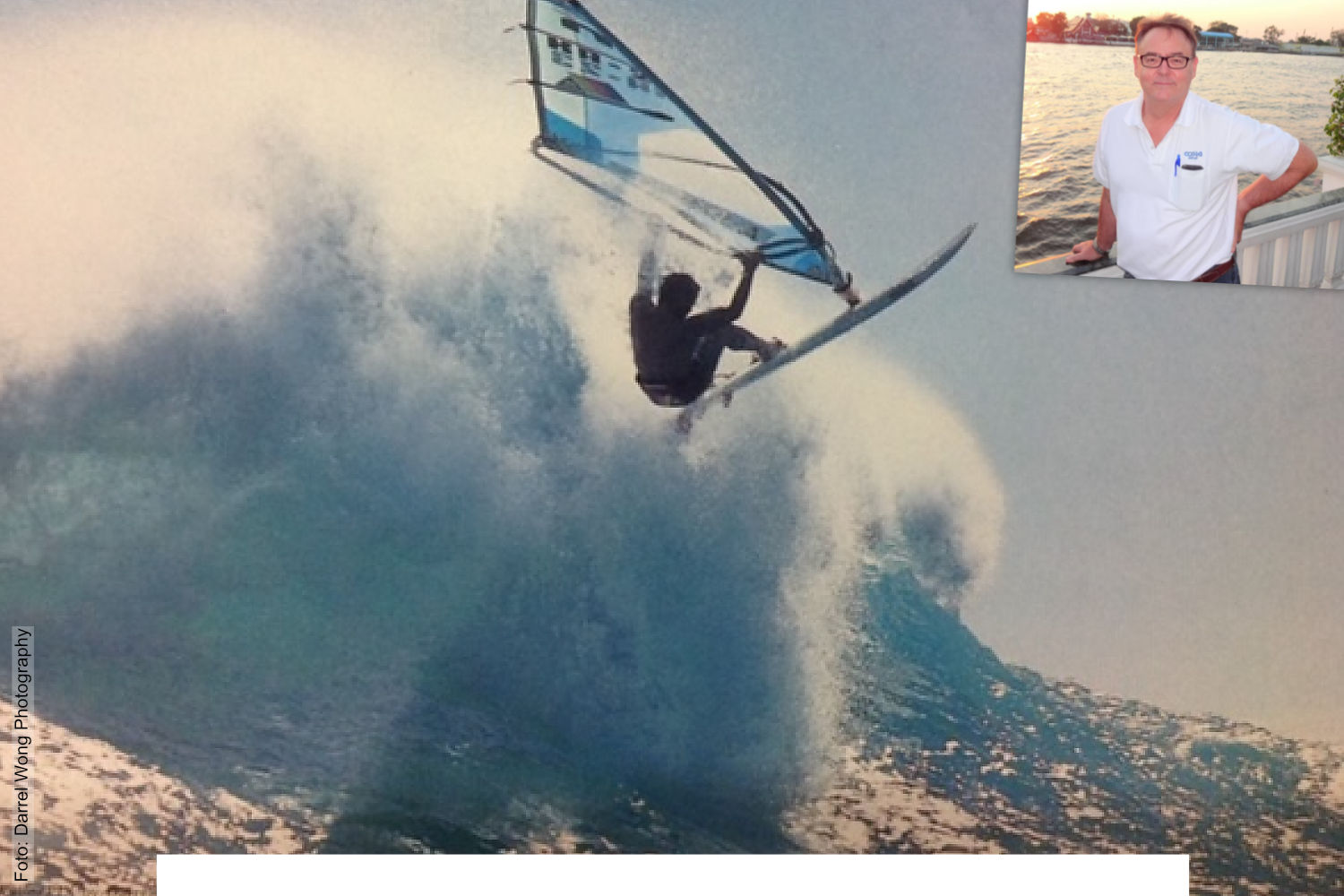
INTERVIEW
BRUCE WYLIE
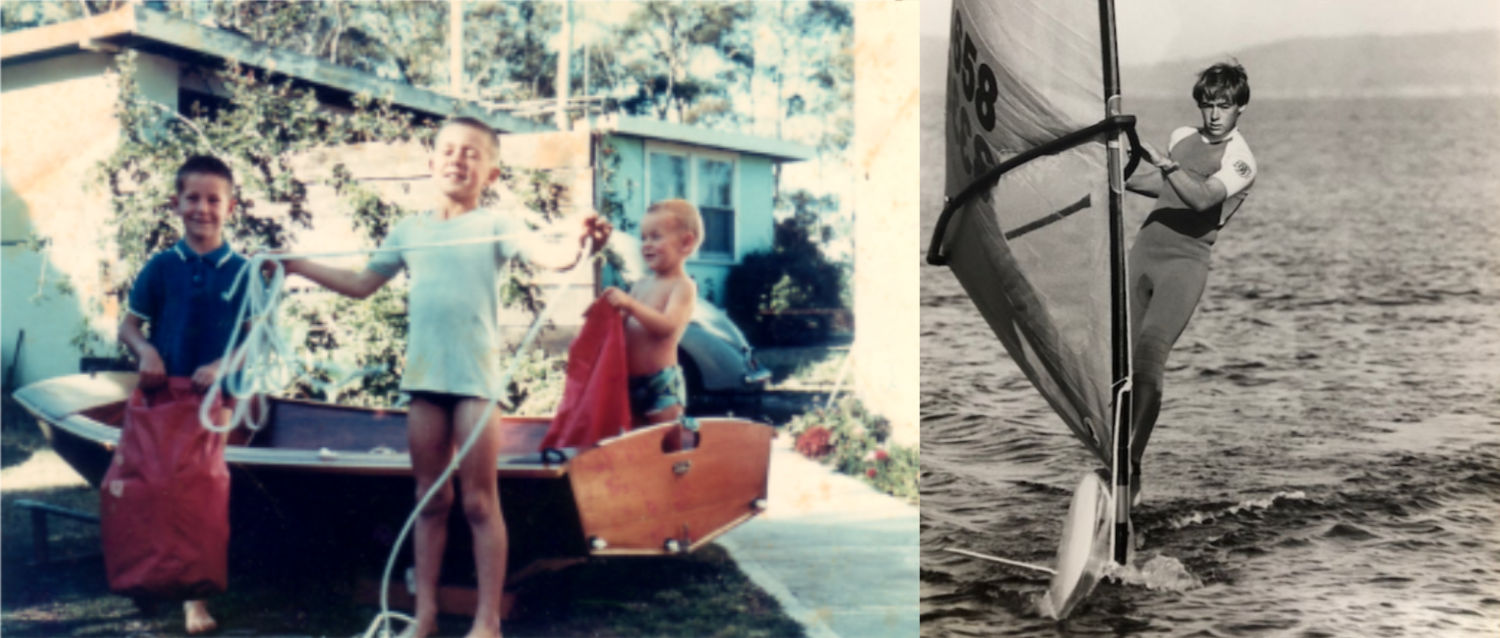
Early sailors: Bruce and his siblings
How did the change to the business side of windsurfing go?
I guess there are two or three key points behind this:
1, As a kid, with my brothers, we helped our father build our Sailing Dinghies, latter we built a yacht in the backyard. So I was always making things which led to me making my own fins and daggerboards from an early age, and then with my brothers we made our first windsurf boards in the garage as well.
2, In 1985, after winning the Olympics and the World Championships, my main sponsor ‘Sailboards Australia’ put me through a Public Speaking and Human Relations course to help me promote and sell their boards. This was a huge learning experience for me.
3, As a Pro Windsurfer, I was always involved in the R&D of our new Sails and Boards. This led to me making my own boards in Maui that I used to sell mostly to Japan and a few customers in the USA. At the same time I did some board design work for Drops and for Mistral.
I guess there are two or three key points behind this:
1, As a kid, with my brothers, we helped our father build our Sailing Dinghies, latter we built a yacht in the backyard. So I was always making things which led to me making my own fins and daggerboards from an early age, and then with my brothers we made our first windsurf boards in the garage as well.
2, In 1985, after winning the Olympics and the World Championships, my main sponsor ‘Sailboards Australia’ put me through a Public Speaking and Human Relations course to help me promote and sell their boards. This was a huge learning experience for me.
3, As a Pro Windsurfer, I was always involved in the R&D of our new Sails and Boards. This led to me making my own boards in Maui that I used to sell mostly to Japan and a few customers in the USA. At the same time I did some board design work for Drops and for Mistral.
Anzeige
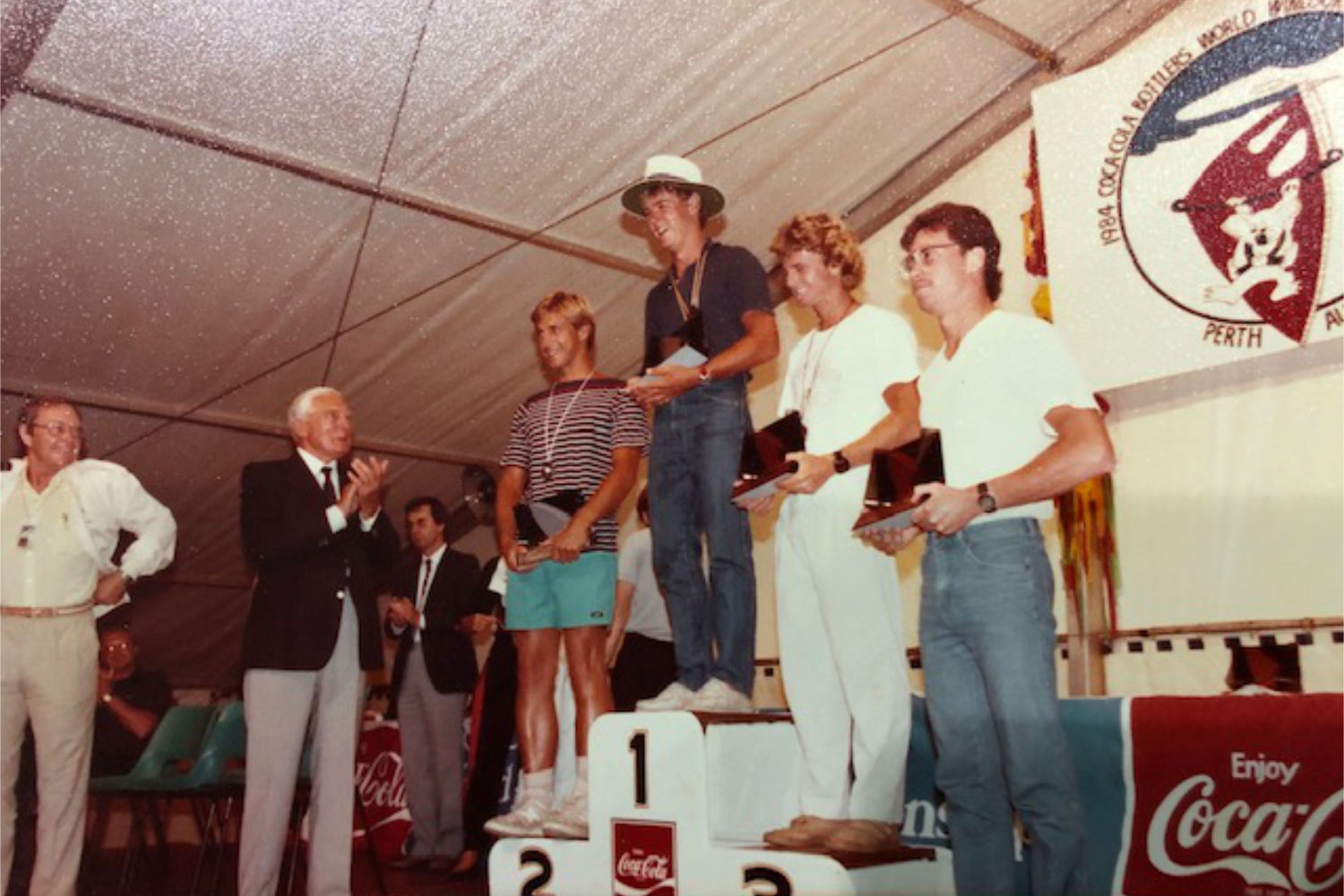
1984 things went well: Bruce wins the world championship title in the windsurfer class
Cobra International is THE producer of boards for many brands in the windsurfing industry. As a supplier, Cobra builds complete boards according to customer specifications. How did you come to Cobra and can you tell us what you do at Cobra?
During my time Shaping and Developing for Mistral, I had some contact with Cobra when we sent masters to Cobra for production. I also took a Mistral Prototype to the IMCO worlds in Thailand in about 2001 and visited Cobra as well. From my days as a Pro Rider at Mistral & Gaastra, I also had links to Rainer Ramelsberger who by this time was working with Cobra, and through a mutual friend in Maui, I had links to Andre Plump also one of the Key Managers at Cobra who were all in contact with me at that time.
What do I do at Cobra ? In the early days, I was working in production making boards and trouble shooting. I also started to make custom prototype boards for Cobra customers - this continues today, but not by me. Then I moved up through product set up and R&D before I then started to oversee production. From there, I became the Windsurf Business Unit Leader and now I am the Chief Commercial Officer for the Watersports division of Cobra.
How difficult is it to find new, greener ways of production and to be competitive at the same time? Do you feel that you can make progress in this area and still make money?
Yes, for sure. We are working to be more environmentally aware and reduce our impact on the environment day in and day out. If you visit the www.cobrainter.com website you can see the last annual Sustainability Reports which demonstrates our activities and efforts that include reducing water and electricity consumption, the planting of trees around the factory and more effective and clean processing in the factory to reduce waste. And of course we are working with suppliers on more environmentally friendly materials as well. Items on this list include the Cores, Fibers, Sandwich Materials, Resins, Paints, EVA and Injection Parts as well as others.
During my time Shaping and Developing for Mistral, I had some contact with Cobra when we sent masters to Cobra for production. I also took a Mistral Prototype to the IMCO worlds in Thailand in about 2001 and visited Cobra as well. From my days as a Pro Rider at Mistral & Gaastra, I also had links to Rainer Ramelsberger who by this time was working with Cobra, and through a mutual friend in Maui, I had links to Andre Plump also one of the Key Managers at Cobra who were all in contact with me at that time.
What do I do at Cobra ? In the early days, I was working in production making boards and trouble shooting. I also started to make custom prototype boards for Cobra customers - this continues today, but not by me. Then I moved up through product set up and R&D before I then started to oversee production. From there, I became the Windsurf Business Unit Leader and now I am the Chief Commercial Officer for the Watersports division of Cobra.
How difficult is it to find new, greener ways of production and to be competitive at the same time? Do you feel that you can make progress in this area and still make money?
Yes, for sure. We are working to be more environmentally aware and reduce our impact on the environment day in and day out. If you visit the www.cobrainter.com website you can see the last annual Sustainability Reports which demonstrates our activities and efforts that include reducing water and electricity consumption, the planting of trees around the factory and more effective and clean processing in the factory to reduce waste. And of course we are working with suppliers on more environmentally friendly materials as well. Items on this list include the Cores, Fibers, Sandwich Materials, Resins, Paints, EVA and Injection Parts as well as others.
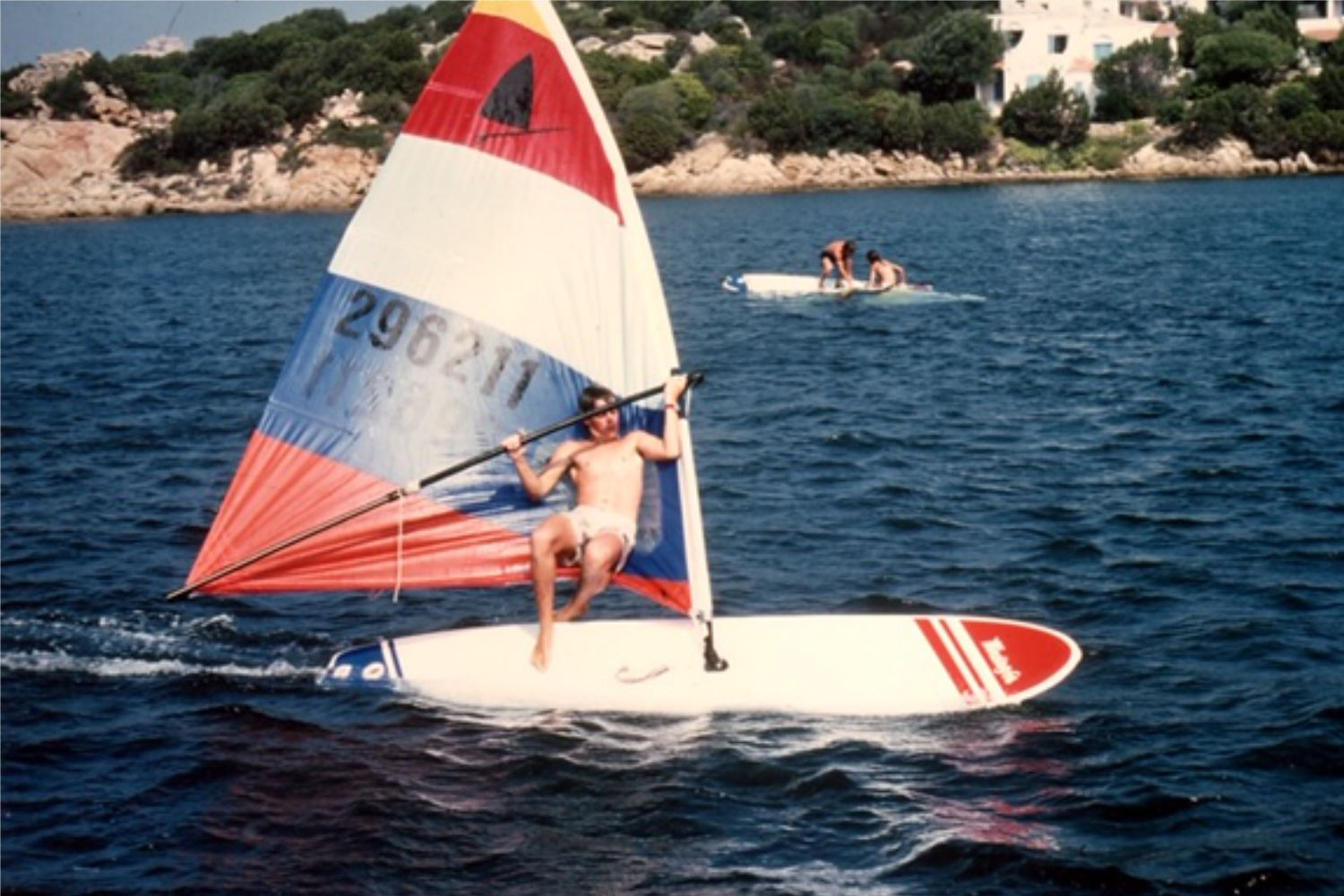
Balance act: A top freestyle trick of the eighties
Do you think that Cobra can reach a closed loop and will be able to recycle whole boards (or fins)?
Yes! For fins and components we can see that we will be able to close the loop, For the complete board it will take longer and there will be logistical challenges, but from a materials perspective it will be possible.
Is windsurfing still the main production field of Cobra or does Cobra produce more items for other areas?
Windsurfing is still a major part of Cobra’s business for sure and for Watersports we also produce a huge number of SUP, Surfboards and Kiteboards. And for all board sports we offer the One Stop Shop options of Fin, Board Bags, Accessory Items - and even Sails now, as well. Yes there is an Automotive division that is growing as a supplier for high end composite components for leading Automotive OEMs, as well as other areas in the business that are dedicated to producing architectural composite components and electric powered composite items such as robots and UAV’s.
Yes! For fins and components we can see that we will be able to close the loop, For the complete board it will take longer and there will be logistical challenges, but from a materials perspective it will be possible.
Is windsurfing still the main production field of Cobra or does Cobra produce more items for other areas?
Windsurfing is still a major part of Cobra’s business for sure and for Watersports we also produce a huge number of SUP, Surfboards and Kiteboards. And for all board sports we offer the One Stop Shop options of Fin, Board Bags, Accessory Items - and even Sails now, as well. Yes there is an Automotive division that is growing as a supplier for high end composite components for leading Automotive OEMs, as well as other areas in the business that are dedicated to producing architectural composite components and electric powered composite items such as robots and UAV’s.
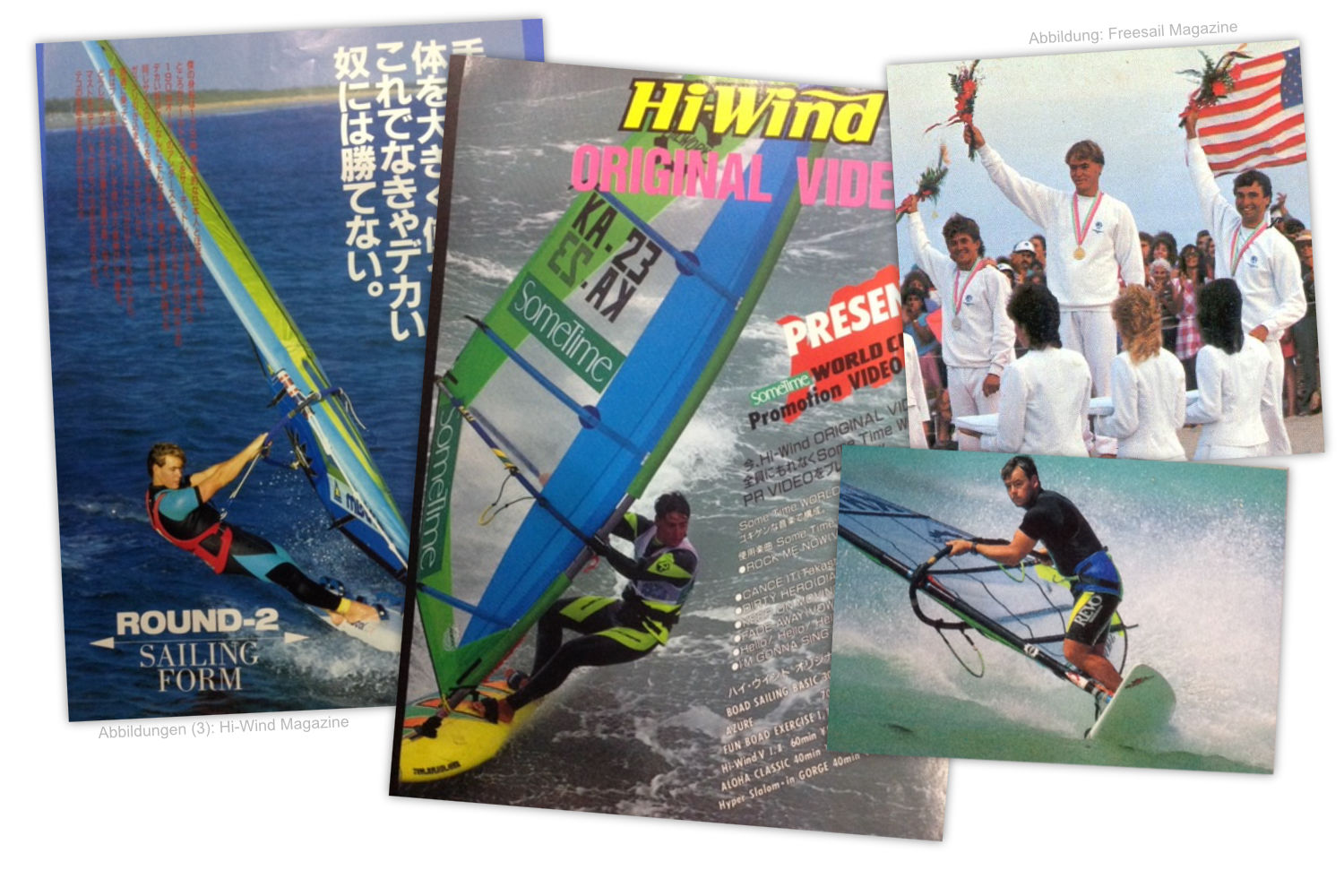
After the Olympic victory (1984) the transition to short boards followed.
Let's look at the market. Today a board with a daggerboard is often seen as a "beginner" board. Do you think that's fair?
No, that’s not fair at all. I grew up sailing dinghies and yachts and these all have daggerboards or Keels for a reason, see CLR. Then when I started windsurfing all boards had daggerboards – think about the Windsurfer and Windglider, In Div II and the Pan Am Cup, all the offshore racing boards were all highly developed and high performing and these all had daggerboards as well. Looking back, some of the most technical and tactical racing that I have done over the years was on longer boards with daggerboards. Sure, developed Formula or now Foilboards will be faster, but for close tactical racing in a wide range of conditions, I still expect Longboards will be a better option for a wider range of users.
At least in Northern Europe, people in the 80s travelled with their boards, sailed from beach to beach, had camping equipment on board, and were away sometimes for days. Such an adventure approach is almost lost today. Why do you think that was lost?
I see a couple of factors here: firstly for many years, the equipment development was focused on faster and shorter and more radical boards and these smaller boards did not lend themselves to adventure sailing as you describe. And nowadays we are dealing with a smartphone generation who struggle to stick to challenging sports. Add some adventure to this and it becomes further and further away from today’s Smartphone kids.
No, that’s not fair at all. I grew up sailing dinghies and yachts and these all have daggerboards or Keels for a reason, see CLR. Then when I started windsurfing all boards had daggerboards – think about the Windsurfer and Windglider, In Div II and the Pan Am Cup, all the offshore racing boards were all highly developed and high performing and these all had daggerboards as well. Looking back, some of the most technical and tactical racing that I have done over the years was on longer boards with daggerboards. Sure, developed Formula or now Foilboards will be faster, but for close tactical racing in a wide range of conditions, I still expect Longboards will be a better option for a wider range of users.
At least in Northern Europe, people in the 80s travelled with their boards, sailed from beach to beach, had camping equipment on board, and were away sometimes for days. Such an adventure approach is almost lost today. Why do you think that was lost?
I see a couple of factors here: firstly for many years, the equipment development was focused on faster and shorter and more radical boards and these smaller boards did not lend themselves to adventure sailing as you describe. And nowadays we are dealing with a smartphone generation who struggle to stick to challenging sports. Add some adventure to this and it becomes further and further away from today’s Smartphone kids.
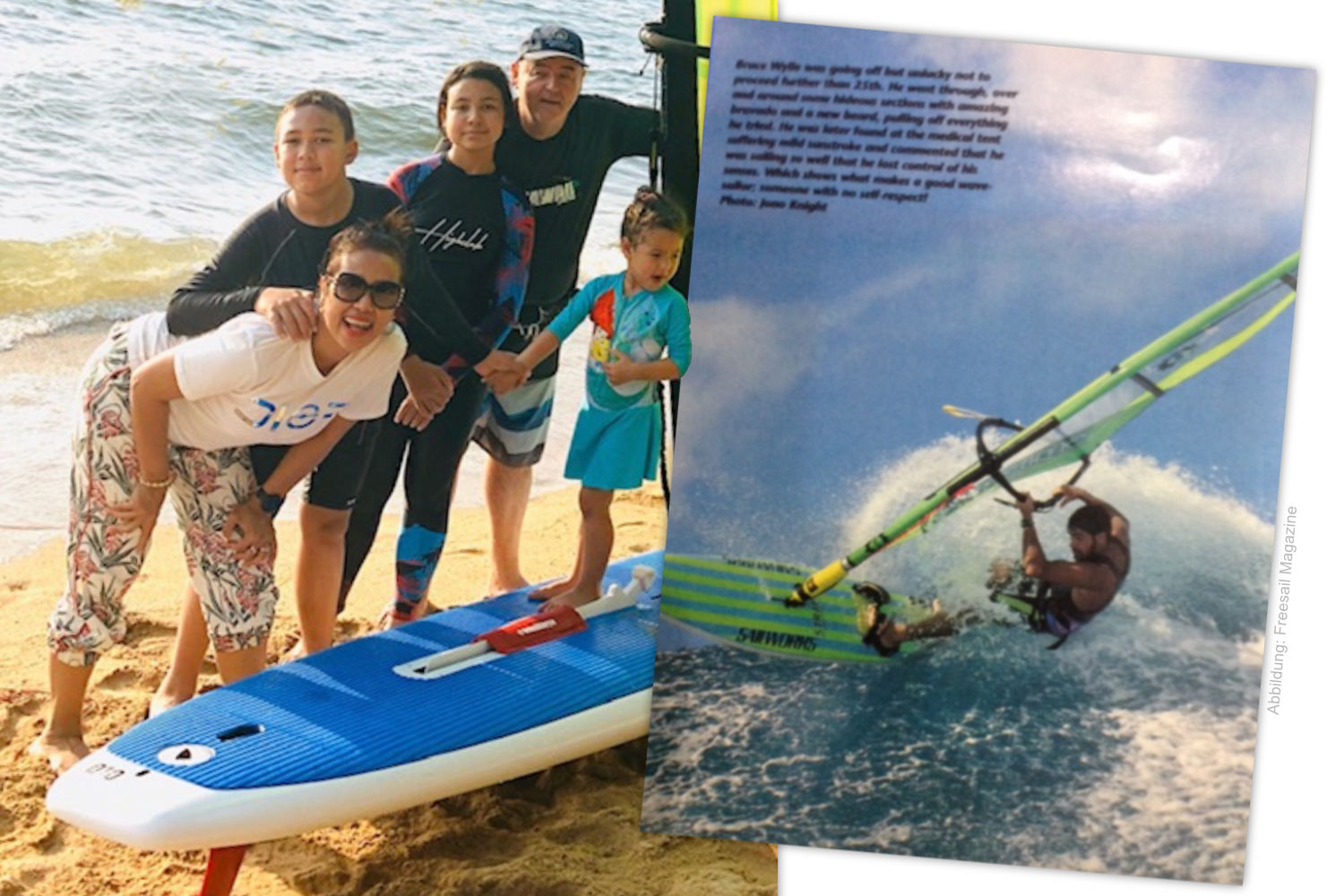
Bruce and his family
You designed the new Windsurfer LT. The Windsurfer LT, by having the ‚retro‘ badge, seems to fill a spot where people rather see it as what it is, a board that can do a lot. (And not only a beginners board) Was the retro reference planned from the beginning?
Yes, for sure. When bringing a multipurpose longboard back to the market we would expect it to get a retro label linked to it. Personally, I feel this is a good thing. Being able to show and share our sport from the past with a new generation today, is not a bad thing for me.
How did the development of the Windsurfer LT start? Was it planned as "Windsurfer" or was it a development you (or Cobra) started yourself?
A few years back, looking at the Wind SUPs in the market with the Windsurf option, I had the feeling we could offer a more rounded board. The cross over boards were designed as SUP’s first and added a mast base only so they did not perform as well as light wind windsurfing boards. From my experience, I had the feeling that a board designed as a light wind windsurfing board would perform very well as an SUP. So the idea was to focus on light wind windsurfing first, with an eye to being effective also for SUP, not the other way around. At first we had the idea to offer as an option to our Cobra customers, then the Windsurfer Class showed interest in the project and cooperated together to bring the board to the market.
Yes, for sure. When bringing a multipurpose longboard back to the market we would expect it to get a retro label linked to it. Personally, I feel this is a good thing. Being able to show and share our sport from the past with a new generation today, is not a bad thing for me.
How did the development of the Windsurfer LT start? Was it planned as "Windsurfer" or was it a development you (or Cobra) started yourself?
A few years back, looking at the Wind SUPs in the market with the Windsurf option, I had the feeling we could offer a more rounded board. The cross over boards were designed as SUP’s first and added a mast base only so they did not perform as well as light wind windsurfing boards. From my experience, I had the feeling that a board designed as a light wind windsurfing board would perform very well as an SUP. So the idea was to focus on light wind windsurfing first, with an eye to being effective also for SUP, not the other way around. At first we had the idea to offer as an option to our Cobra customers, then the Windsurfer Class showed interest in the project and cooperated together to bring the board to the market.
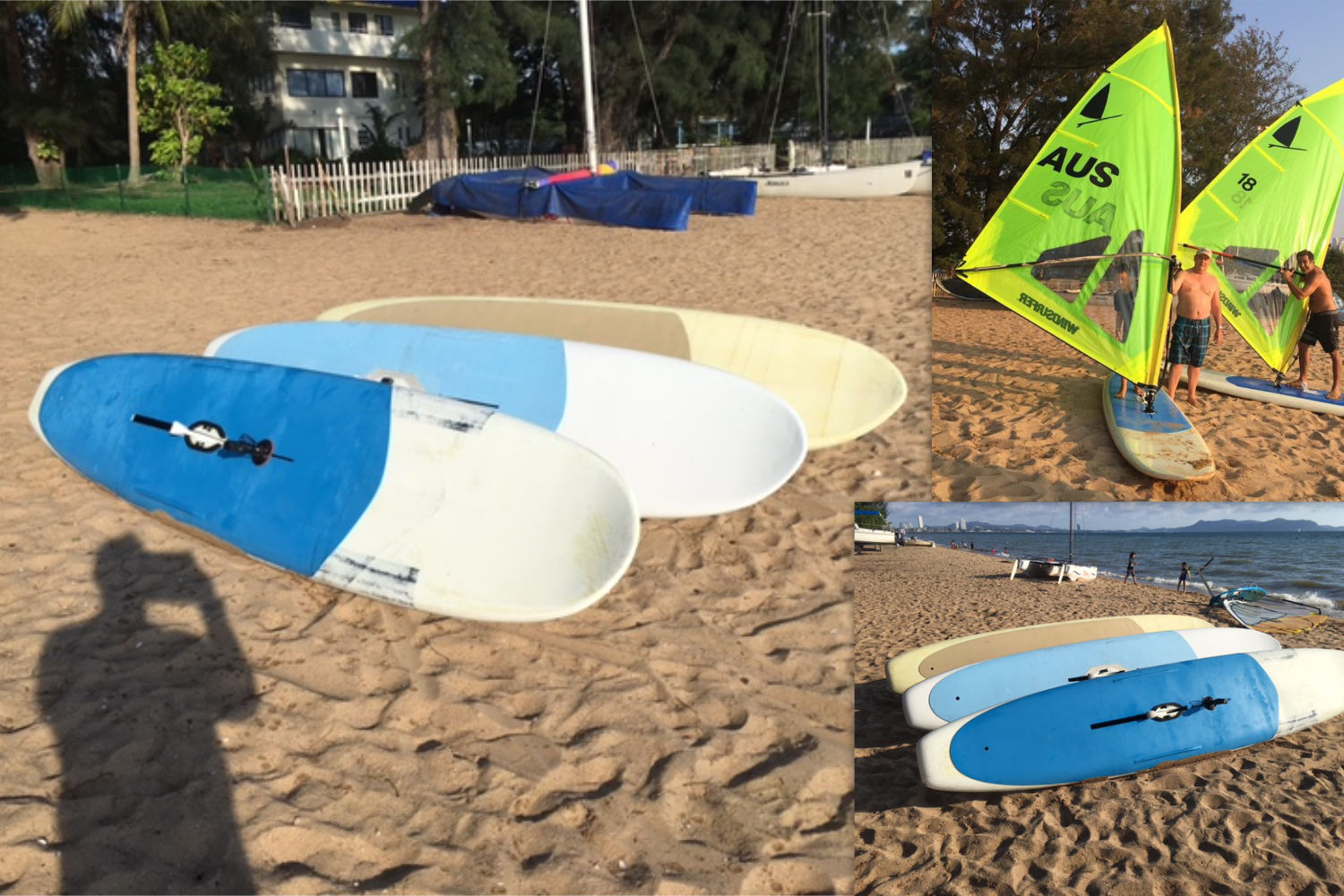
Development stages of the new Windsurfer LT
What is your wish for the sport windsurfing? How do you see the next years?
From a personal and professional view we wish to see a resurgence of interest and participation in Windsurfing. This is why we support the World of Windsurfing which is an Industry Organization based in Germany focused on working together to help rebuild the sport of Windsurfing. And this was also the motivation behind the development of the Windsurfer LT, to provide a platform that allows a larger number of people to participate in windsurfing at all levels on the same board - similar to how my generation enjoyed the sport back then.
Today we are also seeing a spike in interest coming now from the new foiling equipment which is surely attracting some former riders back to the water and at the same time appears really cool to the new generation as well.
With all this activity, I have to say that we have seen a resurgence in Windsurfing building over the last couple of years, and now - post the worst of Covid - it really does appear to be spiking. Hopefully we can keep this new wave of interest in Windsurfing alive for the foreseeable future.
From a personal and professional view we wish to see a resurgence of interest and participation in Windsurfing. This is why we support the World of Windsurfing which is an Industry Organization based in Germany focused on working together to help rebuild the sport of Windsurfing. And this was also the motivation behind the development of the Windsurfer LT, to provide a platform that allows a larger number of people to participate in windsurfing at all levels on the same board - similar to how my generation enjoyed the sport back then.
Today we are also seeing a spike in interest coming now from the new foiling equipment which is surely attracting some former riders back to the water and at the same time appears really cool to the new generation as well.
With all this activity, I have to say that we have seen a resurgence in Windsurfing building over the last couple of years, and now - post the worst of Covid - it really does appear to be spiking. Hopefully we can keep this new wave of interest in Windsurfing alive for the foreseeable future.